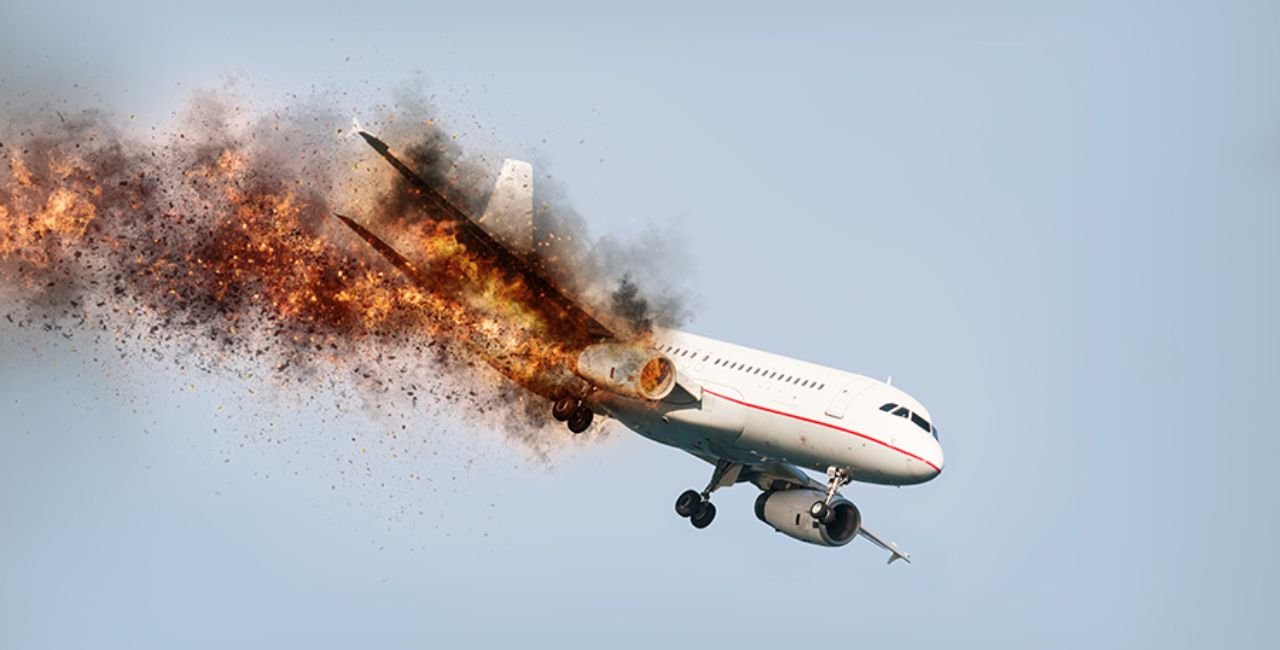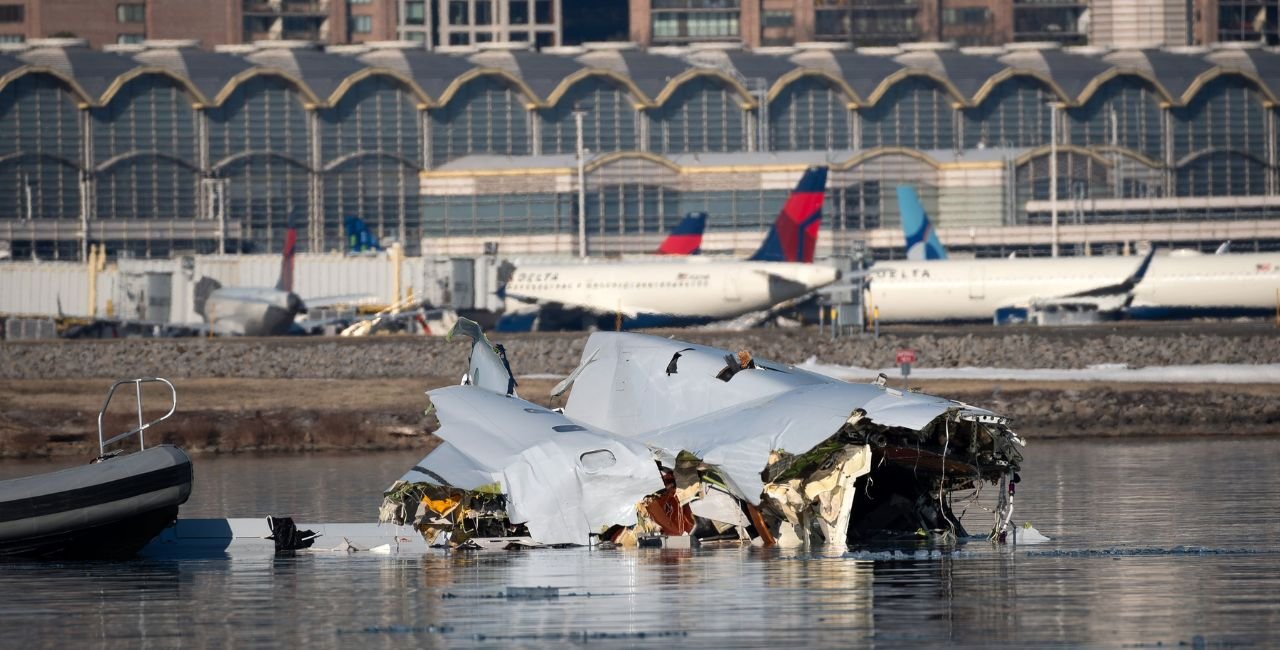
Aviation remains one of the safest modes of transportation globally, yet every incident serves as a powerful reminder of the constant need for vigilance, innovation, and improvement in procedures. On a cold evening in late January 2025, tragedy struck near Ronald Reagan Washington National Airport (DCA) when two aircraft converged in a devastating midair collision over the Potomac River. The recent airplane accident investigation report released by the National Transportation Safety Board (NTSB) provides an exhaustive examination of this event, offering critical insights that could prevent similar occurrences in the future. This report not only details the sequence of events but also highlights systemic issues within air traffic management and route planning that demand immediate attention from regulators, operators, and industry stakeholders alike.
The collision involved a regional jet operating as American Airlines Flight 5342 (a Mitsubishi Heavy Industries RJ Aviation CL-600-2C10, formerly Bombardier CRJ700) and a U.S. Army Sikorsky UH-60L helicopter. All 67 individuals aboard—64 on the commercial flight and 3 on the military helicopter—lost their lives when both aircraft plunged into the icy waters of the Potomac. This incident marked the deadliest U.S. commercial aviation disaster in over two decades and the first major passenger jet crash since 2009. The NTSB’s final report, issued in early 2026 after months of rigorous analysis, data recovery, and expert hearings, stands as a landmark document in modern aviation safety.
In this extensive article, we delve deeply into every aspect of the recent airplane accident investigation report, exploring its findings, probable causes, safety recommendations, and broader implications for the industry. We will examine the historical context of aviation safety protocols, the technical and human factors at play, and how this tragedy underscores the importance of proactive risk management. By analyzing related keywords such as NTSB aviation accident report, midair collision investigation, and aviation safety enhancements, we aim to provide a complete, educational resource for pilots, travelers, policymakers, and anyone interested in the future of safe skies.
Historical Context of Aviation Safety and Midair Collision Risks
Aviation safety has evolved dramatically since the early days of commercial flight. From the pioneering era of the 1920s, when accidents were tragically common due to rudimentary navigation and limited weather forecasting, to the jet age of the 1950s and 1960s, where midair collisions prompted the creation of robust air traffic control systems, the industry has consistently learned from past misfortunes.
Key milestones include the establishment of the NTSB in 1967 as an independent agency dedicated to investigating transportation accidents and issuing safety recommendations. Over the decades, technologies like radar, transponders, Traffic Collision Avoidance Systems (TCAS), and Automatic Dependent Surveillance-Broadcast (ADS-B) have dramatically reduced the risk of midair encounters. Yet, as air traffic volumes soar—particularly around busy hubs like DCA, which handles a mix of commercial, general, and military operations—the challenges persist.
DCA, located just minutes from the nation’s capital, operates under unique constraints. Its proximity to restricted airspace, high-density urban environment, and complex helicopter routes for government and military flights create a delicate balancing act between efficiency and safety. Helicopter routes near major airports have long been scrutinized, as vertical and horizontal separation standards must account for differing aircraft performance, pilot visibility, and instrument limitations. Previous NTSB investigations into near-miss events at DCA and similar facilities had already flagged concerns about route proximity and overreliance on visual separation techniques.
The midair collision investigation process typically follows strict ICAO Annex 13 guidelines, involving wreckage recovery, flight data recorder (FDR) and cockpit voice recorder (CVR) analysis, witness interviews, and simulation modeling. In this case, the NTSB’s multi-year effort included public hearings in 2025 and a detailed board meeting in January 2026, drawing on expertise from human factors specialists, air traffic controllers, and aircraft manufacturers.
For context on similar events in general aviation, readers may find valuable perspectives in related coverage such as exploring general aviation incidents and local safety standards. These discussions reinforce how even routine flights can reveal broader systemic vulnerabilities when not properly addressed.
Detailed Account of the 2025 Potomac River Midair Collision
The accident unfolded on January 29, 2025, shortly before 9:00 p.m. Eastern Standard Time. American Airlines Flight 5342, operated by PSA Airlines, was on final approach to Runway 33 at DCA after departing from Wichita Dwight D. Eisenhower National Airport in Kansas. The CRJ700 carried 60 passengers, 2 pilots, and 2 flight attendants—many returning home or traveling for business. Simultaneously, a U.S. Army Priority Air Transport (PAT25) Sikorsky UH-60L Black Hawk helicopter, conducting a routine training flight with 3 crew members aboard, was navigating a designated helicopter route in the same airspace.
ADS-B data and radar tracks later reconstructed the final moments: the regional jet was descending through approximately 350 feet, while the helicopter, reportedly operating near the published altitude ceiling of its route, was positioned in close proximity. The two aircraft converged rapidly in low-visibility conditions typical of evening operations near the river. Eyewitness accounts and tower communications described frantic attempts by controllers to issue traffic advisories, but the collision occurred before evasive action could fully take effect. Both aircraft were destroyed upon impact with the water, and extensive search-and-recovery operations followed in the challenging Potomac environment.
This event was not the result of a single failure but a convergence of multiple factors. The NTSB’s NTSB aviation accident report meticulously pieced together the timeline using recovered black boxes, air traffic control recordings, and forensic analysis of wreckage. The helicopter’s altimeter displayed potential inaccuracies due to barometric pressure variations and instrument tolerances not fully emphasized in Army training materials. Meanwhile, the commercial crew received a late traffic advisory but relied on the see-and-avoid principle, which has inherent limitations at night and in high-workload scenarios.
To illustrate parallel lessons from training-related incidents, consider accounts like the plane crash at BGSU during a commercial pilot training flight, which highlight how even controlled simulations can expose gaps in procedural adherence and emergency response.
The Investigation Process: From Wreckage to Final Report
The NTSB launched its investigation immediately, designating the event as DCA25MA108. Teams recovered major portions of both aircraft despite the underwater location. The FDR from the CRJ700 provided precise flight parameters, while the helicopter’s combined voice and data recorder offered insights into crew communications and instrument readings.
Investigators conducted an on-site examination, interviewed air traffic controllers and surviving witnesses, and performed extensive simulations of the final approach paths. A public hearing in July-August 2025 allowed stakeholders—including the FAA, Army, and airlines—to present evidence. By January 27, 2026, the board convened for its final determination meeting, complete with animations, expert testimonies, and data visualizations now available on the NTSB’s public resources.
This thorough midair collision investigation process exemplifies best practices in accident reconstruction. It went beyond immediate causes to examine organizational safety cultures, workload management, and long-standing recommendations that had not been fully implemented.
Key Findings from the Recent Airplane Accident Investigation Report
At the heart of the recent airplane accident investigation report lies a clear probable cause: the FAA’s design and placement of helicopter routes in dangerously close proximity to active runway approach paths at DCA, combined with inadequate ongoing review and risk mitigation. The report explicitly states that the air traffic control system placed excessive reliance on visual separation without fully accounting for the limitations of the “see-and-avoid” concept, especially under high traffic loads and reduced visibility.
Contributing factors included:
- Unsustainable arrival rates and fleet-mix changes at DCA that strained controller resources.
- The Army’s incomplete safety management system (SMS), which failed to address altitude exceedances and altimeter error tolerances.
- Limitations in onboard collision avoidance systems that did not provide timely, directional alerts.
- Inadequate real-time risk assessment tools for supervisors managing combined control positions.
The report notes that controllers lost situational awareness due to workload, and the helicopter crew inadvertently exceeded the route’s altitude ceiling. No single individual was solely at fault; instead, the findings point to systemic gaps that had been identified in prior audits but not corrected.
This section of the recent airplane accident investigation report—positioned centrally in the document—emphasizes how previous NTSB recommendations on ADS-B integration and helicopter route redesign were not prioritized, allowing known risks to persist.
Safety Recommendations and Proposed Industry Reforms
The NTSB issued over 40 new safety recommendations targeting the FAA, U.S. Army, and other entities. These range from immediate operational changes to long-term technological upgrades:
- Establish time-on-position limits for controllers and supervisors.
- Mandate scenario-based training on threat and error management.
- Reassess DCA’s airport arrival rates and implement time-based flow management.
- Revise helicopter route design criteria to ensure adequate vertical separation from fixed-wing approaches.
- Require enhanced ACAS/TCAS modifications for better directional awareness and mandate ADS-B In for all equipped aircraft.
- Update pilot training on fixed-wing interactions in busy Class B airspace.
- Implement recurring flight data monitoring and annual transponder checks.
- Develop a robust, independent safety management system focused on midair risks.
Additional calls include anti-blocking radio technology, improved conflict alert systems, and better data-sharing protocols across agencies. These aviation safety enhancements aim to address root causes and foster a stronger safety culture where reporting hazards does not invite retaliation.
Implementing these will require coordination, funding, and cultural shifts, but the potential to save lives is immense.
Broader Impact on Aviation Safety and Public Confidence
The release of this report has already prompted reviews at other busy airports with mixed commercial-military operations. Airlines have begun internal audits of scheduling practices, while military branches are accelerating SMS adoption. Public trust in aviation, though resilient, benefits from transparent investigations like this one.
Comparisons to historical events—such as the 2009 Colgan Air crash that led to sweeping pilot training reforms—show how one tragedy can catalyze industry-wide progress. Discussions in forums like Reddit’s aviation communities have echoed these sentiments, emphasizing the human element in every safety protocol.
For further reading on safety culture at the FAA, see this insightful Forbes analysis of the midair DC crash investigation.
Conclusion
Ultimately, the recent airplane accident investigation report reminds us that safety is a shared responsibility. Pilots, controllers, regulators, and manufacturers must collaborate continuously. Technologies like ACAS X and improved ADS-B will play pivotal roles, but human factors training and workload management remain equally vital.
As the industry incorporates these recommendations, travelers can fly with greater confidence, knowing that every lesson from this tragedy is being transformed into actionable safeguards. Aviation’s remarkable safety record—built on learning from adversity—will only strengthen in the years ahead.
In honoring the 67 lives lost, we commit to a future where such events become even rarer through diligence, innovation, and unwavering focus on prevention.