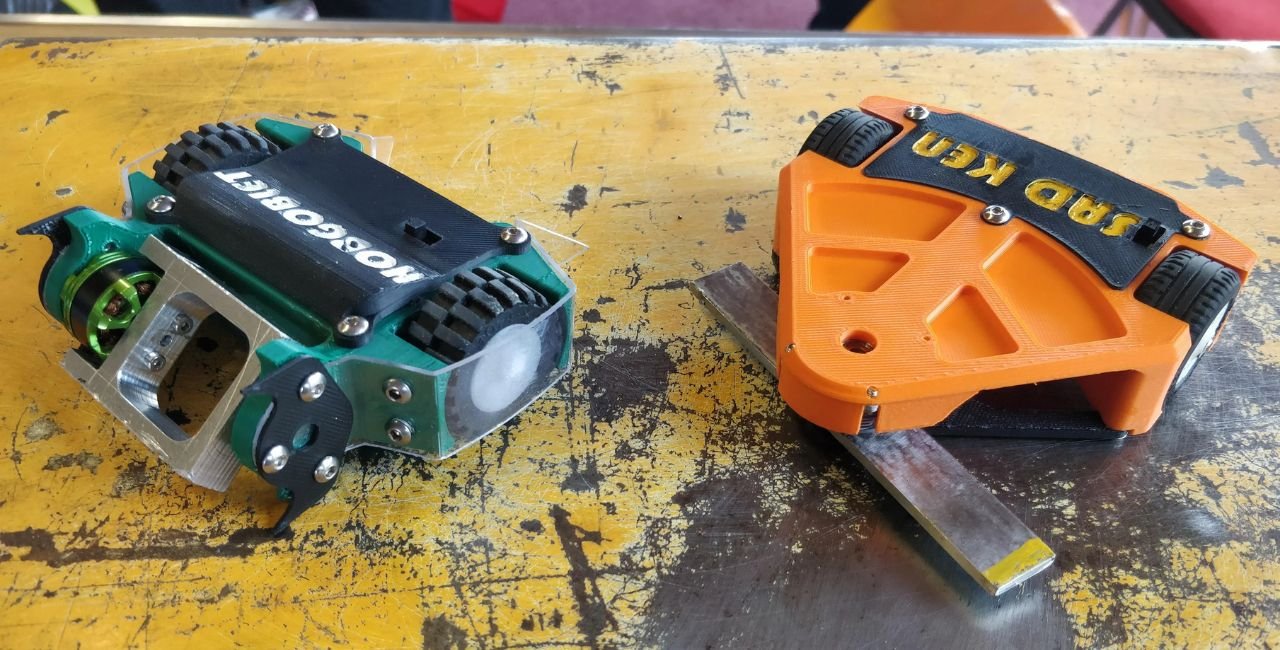
In the dynamic world of robotics engineering, where creativity meets technical precision, the Short Serket combat robot bot stands out as a remarkable example of dedicated innovation in the antweight category. Built by a passionate small team, this bot combines a hammer-saw weapon system with smart features like orientation detection and self-righting capabilities, making it a standout in competitive arenas focused on engineering challenges rather than destruction.
The Rich History of Combat Robotics: From Early Concepts to Modern Competitions
Combat robotics has grown from simple remote-controlled machines in garages to sophisticated engineering showcases that inspire engineers, students, and technology enthusiasts worldwide. The field began gaining popularity in the late 20th century with early events that tested basic mobility and weapon systems in controlled environments. Over time, it evolved into organized competitions emphasizing safety, design creativity, and problem-solving skills.
Pioneering shows and tournaments helped popularize the sport, turning it into a platform for learning about mechanics, electronics, and materials science. Combat robotics has roots in educational outreach, where participants of all ages build bots to understand physics principles like torque, balance, and energy transfer. These events foster teamwork and iterative improvement, as builders refine designs based on real-world testing rather than theory alone.
Today, combat robotics spans multiple weight classes, from tiny antweights to massive heavyweights. The emphasis remains on responsible innovation, with strict rules ensuring fair play and participant safety. This history highlights how the hobby encourages hands-on learning while promoting values of perseverance and ethical competition. For those exploring global technological advancements, such developments reflect broader progress in automation and smart systems.
Understanding the Antweight Class: Challenges and Opportunities in Small-Scale Robot Design
Antweight combat robots represent one of the most accessible yet technically demanding segments of the sport. Limited to just one pound (approximately 454 grams), these bots require builders to maximize every gram of weight for drive power, armor, and weaponry while staying under strict limits. The small size demands exceptional precision in component selection and assembly.
Key challenges include fitting reliable electronics into tight spaces, managing heat from high-performance motors, and ensuring durability against impacts. Yet, these constraints spark creativity. Antweight combat robots often feature innovative solutions like 3D-printed parts, lightweight composites, and efficient power systems. Builders experiment with drive configurations—such as four-wheel drive for better traction—and weapon types that deliver maximum effect without exceeding weight budgets.
The class appeals to beginners and veterans alike because it allows rapid prototyping and frequent testing. Events draw diverse participants, creating communities where knowledge sharing leads to collective growth. Related designs like hammer-saw combat bots excel here by combining lifting or striking mechanisms with spinning elements for versatile attacks. This focus on ingenuity aligns with broader innovative engineering strategies seen in technology sectors today.
The Story Behind Team Serket Robotics: A Newcomer’s Journey in Robotics
Team Serket Robotics emerged in July 2024 as a small, dedicated group based in St. Clair, Michigan. Comprising family members Mike Path, the engineer, and Alex Path, the driver (known as “glitch” for his controller preference), the team started with basic test bots before committing to a full antweight project. Their approach emphasizes learning through iteration, turning setbacks into design improvements.
What began as a simple Scalar test bot evolved when a dramatic collision during testing inspired the name “Short Serket.” The team’s philosophy centers on practical testing and safety, with a straightforward strategy: “Don’t die.” This mindset reflects resilience and smart risk management—core principles in any engineering endeavor.
Serket Robotics antweight efforts highlight how small teams can achieve significant results through passion and resourcefulness. Their work contributes to the vibrant ecosystem of robot building, where collaboration and knowledge exchange drive progress. In line with worldwide trending news on technology, such grassroots innovations demonstrate how accessible tools empower individuals to explore advanced concepts.
Evolution of Short Serket: Prototypes, Versions, and Breakthroughs
The development of Short Serket spanned a full year and involved four major versions plus numerous refinements. Early prototypes used TPU walls and foam wheels, gradually incorporating cutting boards, polycarbonate, and carbon fiber for better protection and performance.
Version 1 introduced finished components like 3D-printed silicone wheels and LEDs. Subsequent iterations added four-wheel drive inspired by a test bot called Deathstalker. By Version 2, the hammer-saw mechanism supported multiple blade types, including 72-tooth, toothless, and 80-tooth options, some laser-engraved with the team’s logo.
Version 3 marked the competition debut, featuring updated armor mounts and relocated safety lights protected by polycarbonate. The bot’s distinctive black-and-gray theme with red “eyes” (LEDs) became iconic, with yellow LEDs deactivating during active combat for visual feedback.
The latest Version 4 integrates advanced machine learning to detect orientation, counterbalance automatically, and self-right without human intervention. This progression from basic prototypes to a smart, reliable platform showcases methodical engineering and a commitment to continuous improvement.
Technical Specifications: What Makes the Short Serket Combat Robot Bot Exceptional
At its core, Short Serket is a hammer-saw design where a moving arm deploys a high-speed spinning blade powered by a READYTOSKY RS 2205 motor. The arm uses a metal-gear SunFounder servo for precise control. Drive comes from a four-wheel system, ensuring agility in the arena.
Electronics include an Arduino Nano with built-in gyro and accelerometer for stability. The system supports RadioLink radio control and lithium-ion batteries for both drive and weapon power. Six front LEDs indicate operational modes, providing real-time status to the driver.
Weighing exactly 454 grams, the bot balances power and durability through thoughtful material choices: polycarbonate tops, TPU elements, and strategic armor placement. These features allow it to withstand impacts while maintaining mobility and weapon effectiveness.
The integration of machine learning for self-righting represents a forward-thinking approach, turning potential vulnerabilities into strengths. Such technical details make Short Serket a model for efficient design in constrained weight classes.
The Engineering Marvel of the Short Serket combat robot bot continues to inspire with its blend of mechanical ingenuity and intelligent software.
Competition Performance and Real-World Testing
Short Serket has already participated in notable events, including Hickory Bot Battles 2025 in North Carolina and BotBrawl Event #20 in Ontario, Canada. These appearances provided valuable data for further refinements.
In competitive settings, the bot demonstrates its hammer-saw capabilities against varied opponents, testing drive traction, weapon spin-up time, and recovery systems. While specific match outcomes depend on strategy and opponent matchups, the team’s focus remains on learning and iterative enhancement rather than solely winning.
Participation in these events underscores the educational value of combat robotics. Builders gain insights into real-time problem-solving under pressure, mirroring professional engineering environments.
The Role of Machine Learning and Smart Features in Small Combat Robots
Incorporating machine learning into an antweight bot like Short Serket elevates the design beyond traditional remote control. The system analyzes orientation data from the gyro and accelerometer to enable automatic adjustments and self-righting maneuvers. This reduces downtime during matches and adds an element of autonomy.
Such features align with global trends in robotics, where artificial intelligence enhances efficiency and adaptability. For antweight combat robots, these advancements prove that even tiny platforms can benefit from cutting-edge technology without compromising simplicity or cost-effectiveness.
Broader Impact: Advancing STEM Education and Responsible Innovation
Projects like Short Serket play a vital role in inspiring the next generation of engineers. Schools and clubs use similar builds to teach electronics, programming, and mechanical design in engaging ways. The hands-on nature encourages critical thinking and collaboration.
By focusing on safe, rule-based competitions, the field promotes positive values such as discipline, creativity, and respect for rules. Teams like Serket Robotics demonstrate that innovation thrives in supportive communities rather than isolation.
This work connects to larger discussions on technological progress in robotics, where ethical development ensures benefits for society. Exploring related areas of technological advancements reveals how such hobbies contribute to broader innovation ecosystems.
Future Prospects for Hammer-Saw Combat Bots and Beyond
Looking ahead, antweight designs will likely incorporate even lighter materials, more efficient batteries, and enhanced sensors. Hammer-saw combat bots may evolve with modular weapons for greater versatility.
Teams like Serket Robotics are positioned to contribute through continued experimentation. As interest in robotics grows, events will expand, offering more opportunities for builders worldwide.
The emphasis will remain on sustainable practices, such as recyclable components and energy-efficient designs, ensuring the hobby aligns with responsible innovation principles.
Conclusion
The Short Serket combat robot bot exemplifies what dedication and smart engineering can achieve in a compact package. From its humble beginnings to competitive arenas, it highlights the joy of building, testing, and improving.
Whether you are a student, hobbyist, or professional, stories like this remind us that technology serves creativity and learning. As Serket Robotics antweight efforts continue, they pave the way for more inclusive and exciting developments in the field.
For those inspired by hammer-saw designs and innovative engineering strategies, resources on emerging trends provide further guidance. The journey of Short Serket proves that big ideas fit into small bots—and that the future of robotics is bright, accessible, and full of potential.